
The best AI SEO tools do not replace SEO judgment. They shorten the distance between a question and the evidence needed to answer it. One tool finds demand, another crawls the site, another measures search or AI visibility, and a reasoning model joins the evidence into a reviewable recommendation.
This guide is organized around jobs and workflows rather than an affiliate-style ranking. It covers established US-market platforms, newer AI search monitoring tools, free first-party data sources and the practical handoffs between them.
What counts as an AI SEO tool in 2026?
An AI SEO tool should improve at least one real decision: which topic to pursue, which page to update, which technical issue to fix, or how to measure visibility in AI-generated answers. A writing assistant can be useful, but content generation alone does not make a reliable SEO system.
The strongest stacks combine six layers:
No single product is best at all six. Buying overlapping dashboards before defining the workflow usually creates more reports, not better decisions.
Quick comparison: the AI SEO tools worth knowing
| Tool | Best job | What it contributes | Important limit |
|---|---|---|---|
| Semrush | Broad SEO and AI visibility research | Prompt research, brand mentions, citations, competitor gaps, keyword research and site audits in one ecosystem. | Its visibility metrics are modeled datasets, not a complete record of private AI conversations. |
| Ahrefs Brand Radar | AI citation and competitor discovery | Search-backed prompt datasets, custom prompts, cited pages, mentions and AI share of voice across major platforms. | A mention is not the same as a click, conversion or fixed ranking position. |
| Surfer | Content briefs and page refreshes | Content Editor, entity and fact coverage, internal-link suggestions, AI Search Score and an AI Tracker for prompts and sources. | A content score is a diagnostic, not proof that the page deserves to rank. |
| Screaming Frog SEO Spider | Technical SEO and crawl automation | Crawl data, exports, JavaScript rendering, API joins and an MCP server for bounded analysis with AI assistants. | Automatic production fixes still require review, backups and small batches. |
| Google Search Console | First-party Google performance | Actual queries, pages, countries, devices, clicks and impressions from Google Search. | The API exposes top rows rather than a guaranteed exhaustive dataset. |
| Bing Webmaster Tools | Microsoft search and AI citations | Search data, crawl tools, IndexNow and AI Performance reporting for citations across supported Microsoft AI experiences. | AI Performance is aggregated and does not reveal a universal AI ranking. |
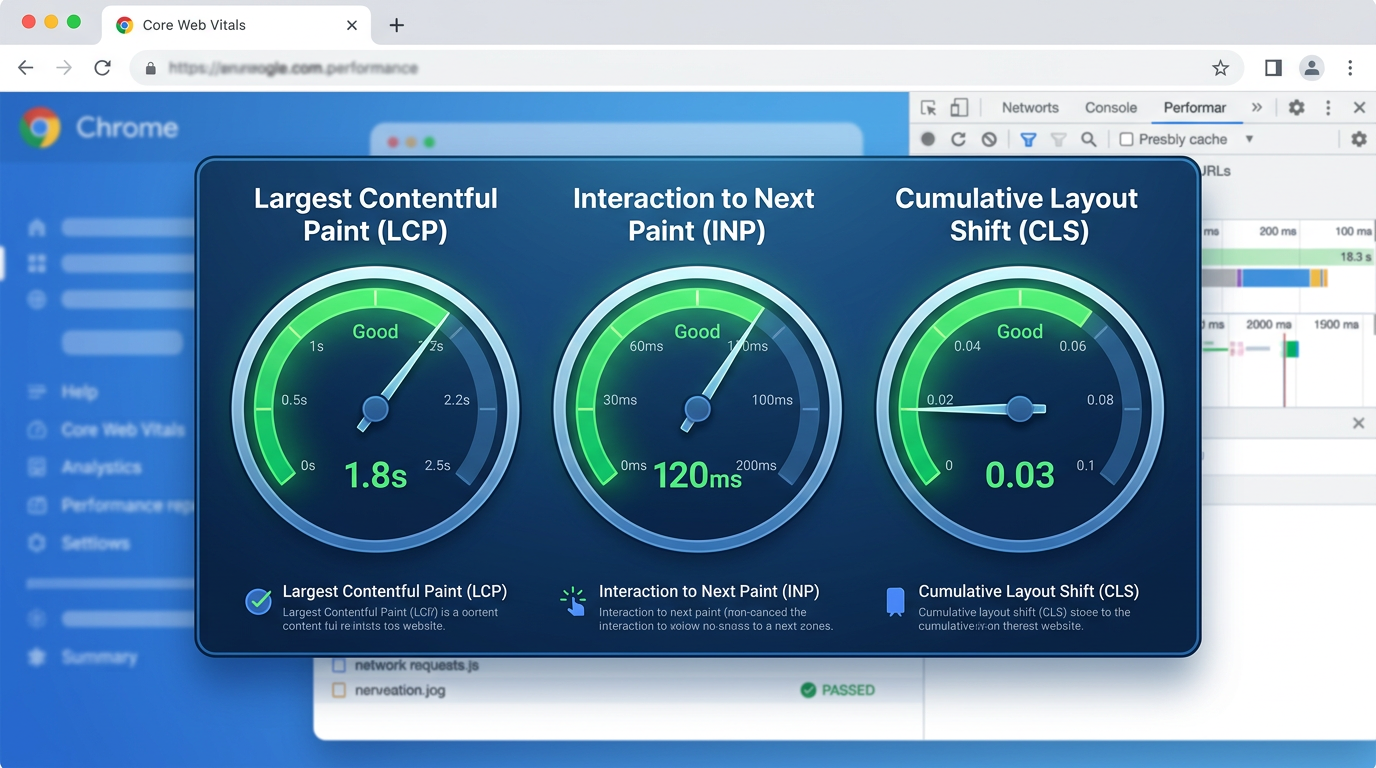
| PageSpeed Insights and CrUX | Real-user and lab performance | Core Web Vitals field data plus diagnostics for rendering, images, scripts and main-thread work. | Field data can be unavailable for low-traffic URLs; lab tests are not real-user data. |
| Profound | Enterprise answer-engine visibility | Daily prompt runs, citations, sentiment, share of voice, response analysis and exports across consumer AI platforms. | Best suited to teams with a defined brand, competitive set and reporting process. |
| Peec AI | Focused AI visibility monitoring | Daily prompt tracking across platforms such as ChatGPT and Perplexity, with cited sources and competitor mentions. | A narrow prompt list can create a misleadingly narrow view of the market. |
| ChatGPT | Analysis, code and workflow orchestration | Useful for joining exports, classifying pages, writing scripts and turning evidence into a structured review queue. | It needs supplied data and verification; fluent output is not source evidence. |
| Claude | Long-context analysis and implementation | Useful for large crawl exports, document synthesis, coding and multi-step tool workflows. | Model output and tool permissions still need explicit boundaries and audit logs. |
A useful distinction: Semrush, Ahrefs, Surfer, Profound and Peec estimate or sample AI visibility. Search Console, Bing Webmaster Tools and CrUX provide first-party platform or user data. Use modeled data to discover opportunities and first-party data to validate outcomes.
Workflow 1: turn an AI visibility gap into a content brief
Use Semrush AI Visibility, Ahrefs Brand Radar, Surfer AI Tracker, Profound or Peec to find prompts where competitors are mentioned or cited and your brand is absent. Export the prompts, cited domains and cited pages instead of copying a dashboard screenshot into a slide deck.
The output should be a page plan, not a promise of AI visibility. AI answers are probabilistic, platform-specific and influenced by sources outside your domain.
Workflow 2: refresh an existing page with Search Console, Surfer and a model
Existing pages are often a better test than net-new articles because they already have impressions, links and a known indexation history. Start with Search Console pages that receive impressions but have declining clicks, weak click-through rate or a growing set of queries the page only partially answers.
Surfer's score can guide the review, but the decision should still be based on user intent, factual completeness and observed search data. Chasing a score can easily add redundant text.
Workflow 3: prioritize technical SEO with crawl, traffic and performance data
A crawler may report thousands of issues. The useful AI workflow is not to summarize the issue count; it is to join technical evidence with page value and return a small, inspectable queue.
Screaming Frog's version 24 line includes an MCP server that can run crawls, analyze data and export reports through compatible AI assistants. A safe workflow looks like this:
- Crawl the site and save the crawl as the immutable technical snapshot.
- Join URLs with Search Console clicks and impressions.
- Add CrUX or PageSpeed metrics where data exists.
- Group issues by template and likely root cause.
- Return the ten highest-value examples with the exact supporting rows.
- Test one template or a small URL batch, then recrawl before expanding the change.
For example, an orphaned page with impressions, conversions and slow field performance deserves more attention than an unused archive URL with the same crawl warning. The model helps join and sort; it does not establish business value by itself.
For a deeper implementation walkthrough, see the internal guide to Screaming Frog MCP technical SEO audits.
Workflow 4: monitor AI citations without inventing an AI rank
AI answer engines do not behave like a stable list of ten blue links. Responses change by platform, model, location, prompt wording and time. A responsible AI visibility report therefore tracks a sample and keeps its methodology visible.
| Metric | What it can tell you | What it cannot prove |
|---|---|---|
| Brand mentions | How often the sampled answers name the brand. | Whether the mention drove a visit or purchase. |
| Citations | Which pages or domains were shown as sources. | That the cited page was the only influence on the answer. |
| Share of voice | Relative visibility within the tracked prompt and competitor set. | Market-wide awareness outside that sample. |
| Sentiment | How the sampled responses describe the brand. | A complete measure of customer opinion. |
| Grounding queries | Retrieval phrases associated with cited content on supported platforms. | A universal keyword rank across AI systems. |
Use Ahrefs or Semrush when AI visibility needs to sit beside broad SEO research. Use Surfer when prompt monitoring must feed directly into content optimization. Use Profound for deeper enterprise analysis across markets and teams. Use Peec when a focused prompt-monitoring workflow is the priority. Add Bing Webmaster Tools because its AI Performance report provides free first-party citation data for supported Microsoft experiences.
Workflow 5: build a 30-day AI SEO experiment for a new site
A new site may not have enough data for meaningful AI share-of-voice trends or page-level CrUX. That is normal. Early success is a clean technical baseline, indexation, relevant impressions and a documented process that can be repeated.
Google's AI search guidance is less exotic than many tool pitches
Google states that the same foundational SEO practices apply to AI Overviews and AI Mode. A page must be indexed and eligible to appear with a snippet, but there is no special AI schema or new machine-readable file required. Google specifically recommends crawlable pages, internal links, good page experience, visible text and structured data that matches the page.
This matters when evaluating AI SEO tools. A dashboard may flag an llms.txt file or offer a proprietary AI readiness score, but neither should outrank basic indexability, accurate content, internal discovery and user experience. Use the score to ask better questions, not as a deployment target.
How to choose the right AI SEO stack
For a solo operator or small site
Start with Google Search Console, Bing Webmaster Tools, PageSpeed Insights and a crawler. Add ChatGPT or Claude for analysis only after you have exports to work with. If you buy one research suite, choose Semrush or Ahrefs based on the workflow you will use weekly; do not pay for both by default.
For a content-focused team
Use Semrush or Ahrefs for market research, Surfer for briefs and refreshes, Search Console for validation, and Screaming Frog for internal links and technical QA. Define who approves facts, titles and publication before enabling generation at scale.
For an agency or enterprise team
Use a broad SEO suite for research and client context, then add Profound or another dedicated answer-engine platform when multi-market prompt tracking, sentiment, exports and stakeholder reporting justify the extra system. Standardize prompt sets, competitor groups, locations and reporting dates before comparing brands.
How to evaluate an AI SEO tool before buying it
| Evaluation question | What a good answer looks like |
|---|---|
| Where does the evidence come from? | The product names the crawl, API, prompt sample, index or first-party property behind each metric. |
| Can the result be exported? | You can inspect prompts, URLs, rows and calculations outside the dashboard. |
| Is the sample documented? | Platforms, locations, prompt set, competitors and refresh frequency are visible. |
| Does it show uncertainty? | Missing data remains missing instead of becoming a confident recommendation. |
| Can automation be bounded? | Read-only analysis is separate from production writes, with approval and logs for changes. |
| Can you reproduce the output? | The model, prompt, filters, source snapshot and date range can be recorded. |
Run the same small test in every product. For example: find indexable pages with impressions but no strong internal-link path, group them by template and return the ten highest-priority examples with evidence. Score the valid decisions, not the length or confidence of the prose.
What to automate - and what to keep human
| Good automation candidates | Keep behind human review |
|---|---|
| Prompt and keyword clustering with a fixed schema | Choosing the business-relevant market |
| Recurring crawl comparisons | Canonical, redirect and robots changes |
| Search Console and Bing opportunity reports | Medical, legal or financial claims |
| Metadata length and duplication checks | Final titles for high-value pages |
| Joining crawl, query, citation and performance exports | Deciding whether correlation justifies a deployment |
| Generating a review queue with source rows | Publishing or changing production without approval |
The principle is simple: automate retrieval, joining, sorting and repetitive validation. Keep irreversible changes, brand judgment and causal conclusions visible to a person.
Final verdict
The best AI SEO tools in 2026 are not the ones with the longest feature list. They are the ones that provide evidence at a defined handoff. Semrush and Ahrefs help frame the market and AI visibility. Surfer helps turn gaps into reviewable content work. Screaming Frog exposes the technical surface. Search Console, Bing Webmaster Tools and CrUX validate what actually happened. Profound and Peec deepen AI answer monitoring. ChatGPT or Claude can connect the data, but they should not replace it.
Start with one workflow, one source snapshot and one measurable decision. Add another tool only when it contributes evidence the existing stack cannot provide. That approach is less exciting than pressing "generate 100 articles," but it is far more likely to improve search performance and teach the team something reusable.
Methodology and primary sources
- Semrush AI Visibility Toolkit guide and data methodology.
- Ahrefs Brand Radar and its official usage guide.
- Surfer Content Editor and AI Tracker documentation.
- Screaming Frog SEO Spider version 24 and MCP release notes.
- Google Search Console Search Analytics API and Google guidance for AI features and websites.
- Microsoft's introduction to AI Performance in Bing Webmaster Tools.
- Chrome UX Report API documentation.
- Profound Answer Engine Insights and Peec AI quickstart documentation.
- OpenAI model guidance and Anthropic model overview.