HubSpot's State of Marketing 2026 is not really a report about tools. It is a report about operating systems. Beneath the familiar headlines about AI, productivity, creators, and search, there is a more important message: marketing is moving from a campaign-centric model to a loop-based model in which brand point of view, first-party data, human judgment, and machine acceleration all have to work together at the same time.
Core thesis: AI is no longer just a content efficiency layer. It is changing where discovery happens, how trust is formed, what kind of traffic converts, and which teams can adapt fast enough to win. The brands that stand out will not be the ones with the most automation. They will be the ones with the clearest taste, the sharpest perspective, the best data foundation, and the strongest human-in-the-loop workflow.
The report is based on a September 2025 survey of 1,505 marketers across North America, Europe, Asia, and Australia. That matters because this is not a speculative futurist essay written at the edge of the market. It is a mainstream signal. The numbers show that AI has crossed a threshold: teams are no longer asking whether to use it. They are asking where it belongs, how it should be governed, and how to make it increase strategic leverage instead of flooding the market with interchangeable output.
There is another reason the report matters. Several of its strongest findings line up with what search, social, analytics, and CRM practitioners have already been observing on the ground: classic top-of-funnel traffic is becoming less dependable, but the traffic that survives the journey from social feeds, communities, creators, and AI interfaces often arrives with much stronger commercial intent. That changes content planning, website UX, attribution, lead scoring, and the economics of conversion optimization.
Executive summary: what matters most
If you only remember five things from the report, remember these.
- AI is not replacing differentiation. It is commoditizing average execution. The easier it becomes to generate content, the more valuable brand point of view, editorial standards, narrative consistency, and human judgment become.
- Discovery is moving beyond Google. Buyers now combine social feeds, creator ecosystems, communities, review platforms, and AI-generated answers before they convert. SEO still matters, but it no longer sits alone at the center of the digital journey.
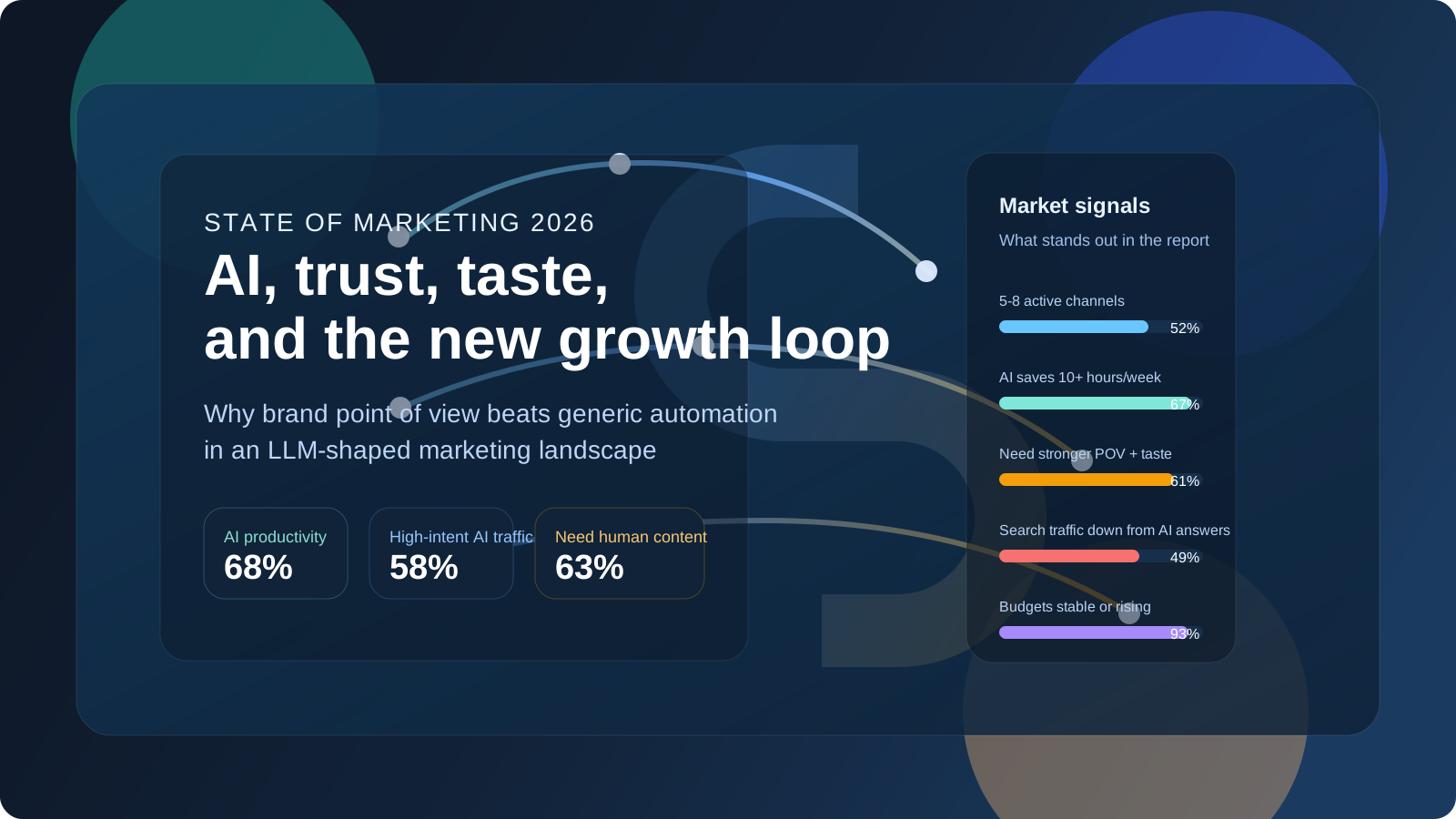
- AI referrals may be smaller, but they are often stronger. The report's 58% signal on higher-intent AI referral traffic is one of the most important numbers in the entire document because it implies a different type of visitor, a different website experience, and a different measurement model.
- Teams need integrated systems, not isolated prompts. A clear brand voice, unified customer data, reusable content models, and fast reporting loops matter more than collecting one-off AI hacks.
- The winning growth model is iterative. In a world of changing algorithms, answer engines, channel fragmentation, and constant experimentation, the best marketing teams operate like product teams: they ship, observe, learn, refine, and repeat.
| Signal | Why it matters | Technology implication |
|---|---|---|
| AI saves time but raises the bar for originality | Efficiency is becoming table stakes, not a moat | Build editorial QA, prompt governance, and strong brand systems |
| Traffic sources are fragmenting | Single-channel planning is too fragile | Need cross-channel planning, unified analytics, and reusable content atoms |
| AI referrals convert deeper in the journey | Websites must capture and convert more decisively | Conversational UX, first-party data capture, and journey-aware CTAs become critical |
| Brand POV is more valuable than generic volume | Memorable brands outperform average AI output | Train systems on brand voice, not just on task completion |
AI has made marketing more human
One of the report's strongest arguments is also one of the easiest to misunderstand. When HubSpot says AI has made marketing more human, the point is not sentimental. It is operational. Automation now handles more of the mechanical work that consumed marketers for years: drafting, repurposing, summarizing, formatting, variant generation, initial segmentation, workflow routing, and report synthesis. That means the activities that remain scarce are the activities that shape meaning rather than merely producing language.
That is why the headline numbers fit together so well. If 67% of teams are saving 10 or more hours per week and 68% feel a real productivity lift, then the next question is not, "How do we produce even more average content?" It is, "What should our people do with the liberated time?" HubSpot's answer, and the correct one in my view, is that this time should be reallocated toward positioning, customer insight, narrative development, experimentation design, and creative decision-making.
This is also why the report's 63% figure on the need for more unique, human-centered content matters so much. AI did not eliminate the need for originality. It increased the penalty for sounding generic. If every team has access to the same models, the same summarization patterns, and the same high-level prompts, then the default output profile gets flatter over time. More content appears, but less of it feels distinctive, trustworthy, or memorable.
That has direct consequences for marketing leadership. The job description of a modern marketer is moving away from "campaign manager who manually executes across channels" toward "system designer who shapes inputs, reviews outputs, and steers market perception." The modern marketer needs taste. Not taste in the superficial sense of color palettes alone, but taste in what deserves emphasis, what should be omitted, what tone is appropriate for a specific buyer state, and what level of confidence the brand should project.
There is also a deeper psychological reason AI pushes marketing back toward human strengths. Buyers do not simply evaluate informational completeness. They evaluate felt confidence. They decide whether a piece of content sounds as if it came from a company that understands the problem from the inside. They notice whether a message has friction, specificity, and narrative pressure or whether it reads like an average of other pages. AI can accelerate draft quality. It still struggles to originate conviction. That gap is now a business opportunity.
Brand point of view is the new moat
The report repeatedly returns to a simple but crucial idea: in a market saturated by generated content, a clear brand point of view becomes a competitive advantage. This is not just about having "brand guidelines." It is about having a defined stance on the category, a recognizable way of framing problems, a consistent interpretation of customer pain, and a tone that sounds like a real organization rather than a neutral autocomplete system.
HubSpot frames this through three connected ideas: point of view, taste, and trust. Point of view is the thesis. Taste is the filtering mechanism. Trust is the commercial outcome. These three belong together. Without point of view, content becomes interchangeable. Without taste, teams publish too much low-signal material. Without trust, none of the traffic matters because buyers do not progress.
The report says 61% of marketers believe their taste and brand point of view are more important than ever when humans and AI work together. That should change how companies think about AI enablement. Most organizations still start with tool procurement and training sessions focused on prompts. A stronger approach is to begin with brand architecture: category beliefs, narrative pillars, do-not-say lists, emotional vocabulary, evidence standards, and examples of the company at its strongest. Once that layer exists, AI becomes an amplifier of strategic consistency rather than a machine for stylistic drift.
This is especially important because many organizations still appear under-positioned. The report notes that 40% of teams have not clearly defined or documented their brand's unique value proposition. In practical terms, that means many businesses are using powerful generative systems without first clarifying what their content is supposed to sound like, what claims it should emphasize, or why the company is meaningfully different from competitors. That combination almost guarantees generic output at scale.
There is an emerging technical implication here as well. Marketers increasingly need reusable brand intelligence, not just a PDF style guide buried in a shared drive. A real AI-era brand system should be machine-readable. It should be usable in prompt libraries, content approval agents, campaign planning templates, knowledge bases, retrieval systems, and QA workflows. In other words, brand must become structured operational data. The same company truth should guide a landing page rewrite, a sales enablement summary, an ad variation test, and a customer support response.
That is why the report's emphasis on taste matters beyond creative philosophy. Taste is a quality-control function. It determines whether a draft should exist at all. It determines whether a stat belongs in a hero message or a supporting paragraph. It determines whether a company should chase a trend on TikTok, launch a creator partnership, or ignore a meme and preserve signal. As generative abundance rises, one of the scarcest assets in marketing is likely to be judgment.
Trust flows from this. Buyers trust consistency more than volume. They trust clear perspective more than loud output. They trust brands that can explain a market shift, not merely list it. And in AI-shaped discovery journeys, trust often has to be established faster than before. If a user arrives from an answer engine or AI assistant already deep in evaluation mode, the content on the page has very little time to prove that the company is authoritative, coherent, and worth further engagement.
The practical brand lesson
If your team wants better AI output, do not start by asking for a better prompt. Start by defining what your company believes, what it refuses to sound like, what evidence it trusts, and what kind of reader response it is trying to produce. Better prompts help. Better operating assumptions help more.
Omnichannel is no longer optional
One of the report's clearest structural findings is that modern marketing has become genuinely multichannel. Only 6% of marketers rely on one or two channels. Twenty-five percent operate across three to four. Fifty-two percent use five to eight. Another 17% use more than eight. That distribution tells us two things immediately. First, the market has accepted that audience attention is fragmented. Second, channel choice is no longer just a media planning issue; it is a production, data, and systems issue.
As channels multiply, the cost of inconsistency rises. Teams that still build campaigns in a linear way, producing custom assets from scratch for each distribution point, will always be slower and more expensive than teams that create reusable content atoms. The right operating model now starts with a strong source asset, then adapts and expands it for different contexts: newsletter summary, short video hook, social thread, conversational FAQ, landing page module, creator brief, sales narrative, and structured answer block.
This is where AI is genuinely useful. It is good at reformatting, repackaging, trimming, and translating ideas across contexts. But the report warns against mistaking content multiplication for meaningful reach. If the same generic claim is simply copied into six channels, the team has increased output without increasing relevance. Omnichannel only works when channel adaptation respects channel behavior. A website article, an Instagram Reel, a YouTube explainer, and a community post do not just require different formats. They require different expectations of pace, emotional entry, proof structure, and calls to action.
Another significant insight in the report is that marketers are still experimenting despite budget scrutiny. Seventy-three percent say budgets are being examined more carefully than before, yet 93% expect 2026 budgets to stay flat or rise. Forty-five percent allocate 10-20% of budget to new channel testing. That suggests a world in which leadership demands efficiency but still recognizes that learning speed is strategic. The teams that stop testing because conditions feel uncertain may end up becoming the least prepared for the next discovery shift.
The channel story also intersects with organizational design. Once a team works across five to eight channels, handoffs become a hidden tax. Creative, paid, lifecycle, web, SEO, and analytics teams cannot function as isolated silos if they are all touching the same buyer journey. AI can reduce some friction, but it cannot solve structural misalignment by itself. The better answer is a shared planning layer: common briefs, central narrative themes, unified performance views, shared content taxonomies, and explicit decisions about which assets are source-of-truth and which are derivatives.
Content after generative saturation
HubSpot's content findings are some of the most useful in the report because they move beyond the simplistic idea that "AI helps create more content." Yes, 71% of marketers say AI helps them produce more. But the report also says 52% believe AI is making content so easy to create that it is becoming less effective overall, and 53% struggle to differentiate in a market saturated by AI-generated material. Those numbers should recalibrate how teams think about their editorial strategy.
The right response is not to abandon AI-assisted production. It is to narrow the gap between what is easy to produce and what is worth publishing. That means moving from output metrics to impact metrics. The question is not "How many assets did we ship?" It is "Did this asset create a signal that a buyer actually cared about?" In practice, that implies a higher standard for specificity, examples, point of view, evidence, and format-market fit.
The report's emphasis on video, especially short-form video, reinforces this shift. In a world where large volumes of blog content can be generated with little effort, formats that preserve more human texture gain value. Voice, face, pacing, timing, humor, imperfection, and personality still communicate authenticity in ways that text generation struggles to replicate convincingly. That is a major reason short-form video continues to outperform. It carries more of the human signature.
Yet the written word is not obsolete. The report explicitly notes that smaller companies are still more likely than average to earn ROI from blog posts. The mistake is to frame the future as video versus text. The real choice is generic content versus differentiated content. A deeply reasoned article with useful examples, original framing, supporting tables, and structured insight can still outperform. But it has to do real work. Thin, interchangeable summaries are the format most likely to get crowded out by answer engines and low-cost generation.
Creator partnerships fit the same logic. As audiences grow skeptical of obvious corporate messaging, trusted intermediaries become more valuable. The report notes that 89% of companies worked with a creator or influencer in 2025, far above the previous year. That is not just a media trend. It reflects the broader fragmentation of trust. When brand messages no longer travel through a few central gates, companies have to participate in networks of borrowed trust: creators, niche communities, customer advocates, and domain experts.
There is also a technological lesson buried here. AI makes content repurposing cheaper, but it does not make distribution context easier to understand. Teams still need to model how an insight moves through the funnel. A single research finding may become a long article, a creator briefing, a carousel, a short video script, a sales objection card, and a chatbot answer. That is not just content marketing. It is modular knowledge design. The best content teams increasingly look like editorial engineers.
| Old content playbook | New content playbook |
|---|---|
| Publish often and optimize later | Publish only what carries a clear perspective and can be reused intelligently |
| Blog first, other channels second | Create source assets that can travel across video, social, newsletters, creator networks, and AI answers |
| Measure traffic and impressions | Measure conversion quality, engaged sessions, pipeline contribution, assisted influence, and reuse yield |
| Worry mostly about content production cost | Worry about content sameness, trust decay, and channel-context mismatch |
Personalization requires a real data layer
Another powerful thread in the report concerns personalization. Ninety-three percent of marketers say personalization improves leads or purchases. That number is so high that it should settle the philosophical debate. Personalization is no longer experimental garnish. It is a baseline revenue lever. The interesting issue is not whether it works. It is why so many teams still find it difficult to operationalize.
HubSpot shows that many marketers still lack access to core customer information. The report highlights purchase habits, interests, hobbies, and basic demographic information as especially valuable inputs, yet many teams do not have consistent access even to these fundamentals. That points to a familiar problem: the strategy is personalization, but the operating reality is data fragmentation. CRM records, web analytics, ad platform audiences, product usage data, email engagement, and customer service context still live in too many separate places.
AI changes the economics of personalization, but only if the inputs are connected. Once teams have stable first-party data, AI can help score, segment, enrich, summarize, predict, and trigger. Without that connected base layer, AI mostly creates the illusion of sophistication. It can write a tailored paragraph, but it cannot know which tailoring matters. It can produce variants, but it cannot decide which signal should drive the branch. In other words, personalization in the AI era becomes less about dynamic copy alone and more about decision architecture.
This is where CRM regains strategic importance. The report repeatedly points back to a unified data foundation, and for good reason. A disconnected martech stack encourages fragmented experiences. A connected system allows for lifecycle-aware orchestration. If a buyer arrives from an AI answer engine, watches a short product explainer, returns via branded search, and opens a nurture email, that sequence should matter. The content and CTA they see should reflect that accumulated context. More importantly, the reporting model should understand that journey as a sequence rather than as isolated channel wins and losses.
Teams should also stop thinking of personalization as a narrow email function. Personalization now spans website paths, landing page modules, product-led onboarding, creator campaigns, retargeting logic, sales follow-up, chatbot context, and even how answer-engine-ready content is framed. A page visited by a high-intent AI referral should not feel like a cold blog landing. It should recognize that the visitor may already be past the awareness stage and is now testing whether the brand can help them decide.
The long-term implication is clear: data quality becomes brand quality. If your systems cannot remember who the customer is, what they care about, and what they have already done, your marketing will feel less intelligent than the AI interfaces that introduced them to you in the first place. That mismatch will become increasingly expensive.
Search is changing shape, not disappearing
The report's strongest growth-related finding is the shift in search behavior. Forty-nine percent of marketers say web traffic from search has declined because of AI answers. At the same time, 58% say AI referral traffic shows significantly higher purchase intent than classic search, and 60% say marketers must provide seamless buying experiences once those visitors arrive. This is one of the most useful frameworks for interpreting the future of search because it breaks the conversation out of false binaries.
Search is not dead. What is changing is the balance between retrieval and resolution. Traditional search was often a journey of exploration. A user entered broad queries, scanned multiple results, compared pages, opened tabs, and gradually moved closer to decision. AI-assisted search compresses parts of that process. Some informational work happens before the click. Some comparisons are surfaced by the model. Some synthesis is done in the interface itself. That means the click that remains is often closer to evaluation or action.
For marketers, this changes both content design and website design. Content now has to perform in at least two environments: in-platform summarization and on-site conversion. The page needs to be clear enough, structured enough, and authoritative enough to be usable by answer engines. But it also needs to reward the user who arrives after the summary. If the page simply repeats generic introductory material, it wastes the user's state of progress. If the page offers specific proof, comparison logic, implementation detail, and clear next actions, it can convert highly qualified intent.
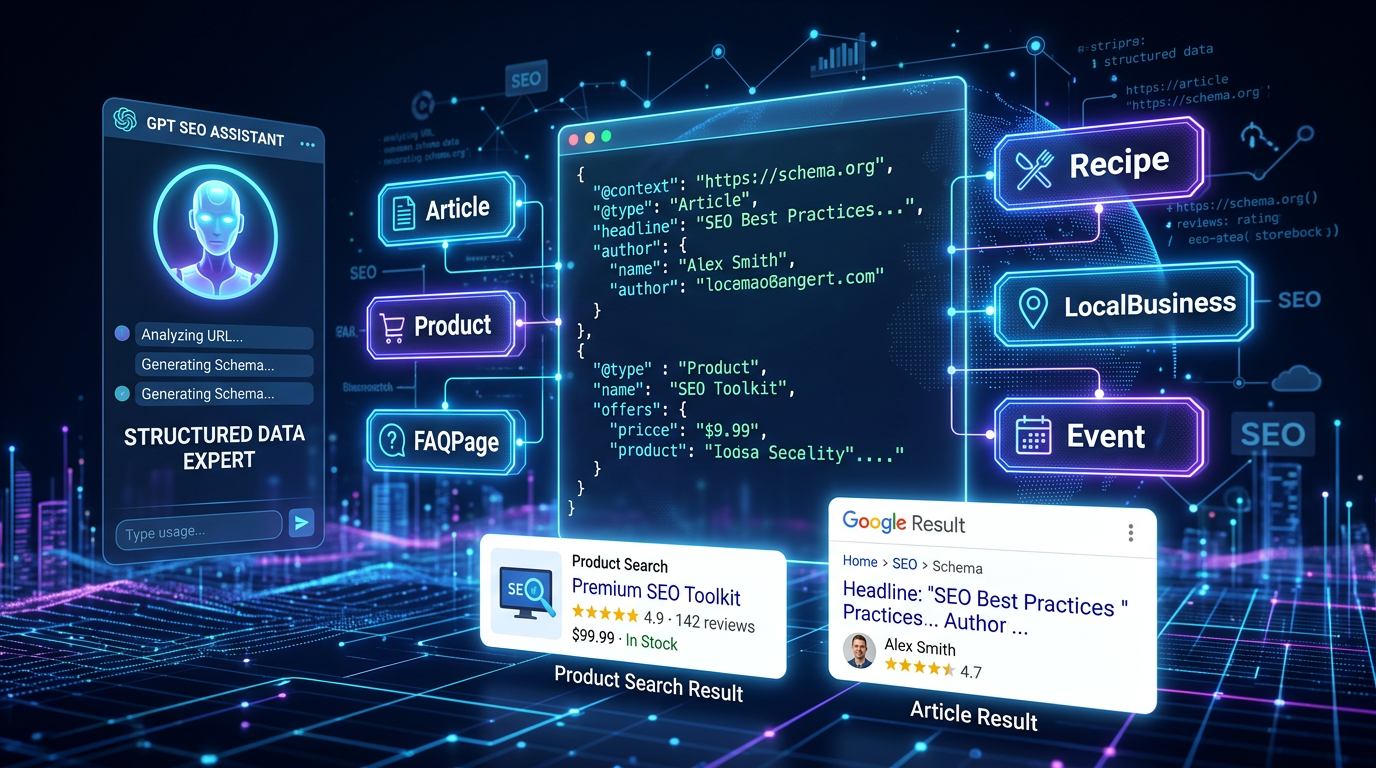
This is why the report's references to answer engine optimization are so important. AEO is not a replacement term for SEO, and it should not be treated as buzzword inflation. It is a reminder that content increasingly has two audiences: machine interpreters and human decision-makers. The same page may need structured data, semantically explicit sections, comparison-ready phrasing, FAQ clarity, and well-labeled supporting evidence, while still sounding like a brand with a point of view.
That dual requirement has architectural consequences. Content models matter more. JSON-LD matters more. Distinct definitions, comparisons, step sequences, feature tables, and entity clarity matter more. So do authorship signals, case studies, examples, and quotes that communicate confidence to humans. You cannot optimize only for the machine and hope the human will convert. You also cannot optimize only for prose elegance and hope the machine will understand your value proposition correctly.
The report also says 62% of marketers now run campaigns in more interactive cycles, updating content continuously to stay discoverable. That is another sign that marketing is becoming more product-like. Teams no longer ship a campaign, wait, and review at the end. They launch, observe, refine, and reissue. Search, social, and AI interfaces are now too fluid for static planning windows. In practical terms, this means content refresh programs, landing page iteration, schema enhancement, intent reclassification, and fast response loops become normal operations rather than occasional projects.
What modern SEO teams should do differently
First, they should stop treating SEO as a channel disconnected from content operations, website UX, and CRM. Search visibility now depends as much on content structure and on-site usefulness as on keyword targeting. Second, they should build pages that are legible to both machines and decision-ready buyers. Third, they should create content bifurcation on purpose: one layer that is semantically explicit and technically parseable, and another layer that is rich in point of view, examples, and buyer confidence. Fourth, they should track AI referrals separately, because the behavior profile is different and the optimization path is different.
There is also an underappreciated leadership implication. As more discovery shifts into answer engines, the teams that win will often be the teams with the best internal collaboration between SEO, PR, brand, lifecycle, and sales enablement. Why? Because answer engines synthesize from signals across the open web. Presence, citations, authority, consistency, and category framing all matter. A company cannot solve that with on-page tweaks alone.
The real technology story: from tools to systems
Most people will read the report and focus on tactical trends: short-form video, creator partnerships, channel budgets, AI usage. Those are real, but the deeper lesson is technological. Marketing is transitioning from a stack of tools to a stack of connected systems. The key components of that system are becoming easier to identify.
1. A unified data foundation
This is the layer that combines contact history, behavioral signals, campaign interactions, and commercial outcomes. Without it, personalization remains shallow and attribution remains noisy. With it, AI can prioritize, summarize, enrich, and orchestrate with actual context.
2. A reusable knowledge layer
Teams need structured brand knowledge, product truth, positioning logic, customer objections, proof points, and category definitions that can be reused across content, sales, support, and automation. If every workflow starts from a blank prompt, the company will never compound learning. A brand knowledge layer can be fed into retrieval workflows, planning copilots, content QA systems, and support agents.
3. A modular content layer
The same insight should be able to become a blog section, a video hook, a creator brief, a product page FAQ, an email sequence, and an answer-engine-ready summary. That requires not just better writing, but better content modeling. Teams should think in modules: definitions, proof blocks, mini case studies, objections, comparisons, visuals, steps, and structured examples.
4. An orchestration layer
This is where automation matures. Instead of one workflow per channel, companies increasingly need logic that can route and adapt assets across the entire growth loop. A content brief can trigger draft creation, legal review, channel adaptation, schema generation, CTA selection, localization, sales handoff, and performance monitoring. AI agents may play a role here, but only if guardrails, ownership, and escalation paths are clear.
5. A rapid measurement layer
The report emphasizes speed of analysis and optimization. That requires dashboards that are not merely descriptive, but operational. Teams need to know which pages are receiving high-intent AI traffic, which creators are influencing pipeline quality, which variants convert better for segmented audiences, and which proof elements move visitors toward action. Reporting has to become usable inside weekly decision loops rather than after-the-fact retrospectives.
This system view also clarifies what many teams still get wrong about AI adoption. They buy point solutions for generation while neglecting the layers that make generation compounding and safe. The most durable advantage will probably go to companies that invest less in novelty for its own sake and more in connective tissue: metadata, taxonomies, governance, analytics, permissions, and QA.
From a technical perspective, four practices are increasingly non-negotiable.
- Structured content and schema: because machine readability influences discoverability and reuse.
- Prompt governance and model policies: because teams need consistency, not random output drift.
- Human review checkpoints: because high-speed publishing without editorial accountability damages trust.
- First-party measurement discipline: because the shifts in search and referral traffic make last-click simplifications even less reliable.
There is also a strong case for retrieval-enhanced workflows in marketing organizations. When brand rules, case studies, product documentation, historical campaign insights, and customer research live in accessible repositories, AI systems can produce more context-aware drafts. That matters because one of the most common failures in marketing AI is not grammar. It is strategic amnesia. Systems write smoothly while forgetting what the company already knows. Retrieval reduces that waste.
What "AI maturity" should mean in marketing
It should not mean that your team can produce more drafts per hour. It should mean that your company can turn customer context, brand intelligence, and campaign feedback into better decisions faster than competitors can.
A practical 90-day playbook
The report is strongest when read as a set of operating instructions. If a modern marketing team wanted to act on its implications quickly, the first ninety days could look something like this.
Days 1-30: clarify the brand and audit the system
Start with diagnosis, not production. Document the brand point of view. Define the language the company wants to own. Build a short list of claims the brand should always reinforce and a list of phrases it should avoid. Then audit your current system: traffic sources, AI referrals, top converting pages, weak pages, creator relationships, CRM data completeness, content reuse patterns, and reporting latency. Identify where your current stack loses context.
At the same time, review your best-performing content manually. Look for the characteristics that actually correlate with performance: specific examples, stronger opinions, original visuals, better narrative flow, clearer proof, or stronger commercial framing. This gives you the raw material for a real content quality rubric rather than a generic style guide.
Days 31-60: build the machine-readable operating layer
Turn your brand rules into reusable operating assets. Create a prompt library. Build a short retrieval-ready document that defines your audience, value proposition, proof points, category beliefs, and common objections. Add a QA checklist for AI-assisted content. Improve structured data where relevant. Refresh your most commercially important pages with clearer definitions, comparison sections, FAQ blocks, and intent-aligned calls to action.
On the data side, identify the minimum viable personalization layer. Which data points are most useful but currently missing? Where can your CRM, analytics, product, and campaign data be stitched together more reliably? Which traffic sources should be tracked with dedicated segmentation, especially AI-originating referrals? Keep this phase practical. The objective is not a perfect customer data platform. It is a more actionable context layer.
Days 61-90: launch the loop
Now move into an iterative publishing cycle. Choose one or two major themes and distribute them across multiple channels. For each theme, produce one deep source asset, then create derived versions for newsletter, short-form video, social, community, and sales enablement. Track engagement quality, conversion quality, assisted influence, and reuse efficiency. Update pages and assets based on what actually moves qualified behavior.
At this stage, treat your website as a conversion system for high-context visitors rather than only as a publishing destination. If AI and community traffic are arriving later in the journey, then pages need stronger proof blocks, easier product understanding, clearer CTA hierarchy, and frictionless contact or trial paths. Test layouts that assume visitors already know the category basics. Do not make them restart the journey from zero.
| Phase | Primary goal | Deliverables |
|---|---|---|
| Days 1-30 | Clarify point of view and identify weak links | Brand POV document, content quality rubric, traffic source audit, AI referral baseline |
| Days 31-60 | Make the system reusable and machine-readable | Prompt library, retrieval-ready brand knowledge file, schema refresh, segmentation plan |
| Days 61-90 | Run an integrated growth loop | One major source asset, multichannel derivatives, website conversion tests, weekly optimization routine |
What the report implies for different team types
For SEO-led teams
Prioritize answer-engine legibility, structured content, FAQ clarity, proof density, and stronger conversion paths for nontraditional search traffic. Add a reporting slice for AI-originating visitors. Stop treating rankings as the sole measure of organic health.
For brand-led teams
Invest in a stronger machine-readable brand system. Your differentiation is now an input to every generative workflow. If it is not documented and operationalized, it will be diluted in output.
For lifecycle and CRM teams
Focus on data completeness and decision logic. AI improves the value of context. Better enrichment, segmentation, and journey-state detection will matter more than simply increasing message volume.
For content teams
Move from an asset mindset to a modular knowledge mindset. Make your best ideas portable across formats. Use AI for acceleration, but make originality, proof, and narrative energy non-negotiable editorial standards.
For revenue leadership
Ask better questions. Do not just ask how much faster AI makes production. Ask whether your system is producing more trust, more qualified traffic, more pipeline efficiency, and more learning velocity.
The next two years: what is likely to compound
If the report is directionally right, then the next two years in marketing will reward five capabilities above most others.
- Distinctive brand systems: because more generated content will make sameness easier to detect and easier to ignore.
- Better first-party context: because personalized, high-intent experiences require stable data and journey memory.
- Answer-engine-ready content architecture: because machine interpretation will continue to shape discoverability.
- Faster experimentation loops: because platforms, AI interfaces, and consumer habits will keep shifting at high speed.
- Human editorial judgment: because someone still has to decide what is true, useful, persuasive, timely, and worth amplifying.
One of the easiest mistakes organizations can make right now is to view AI as a substitute for strategic clarity. In reality, AI punishes unclear strategy. It reveals weak positioning by scaling it. It exposes data fragmentation by trying to personalize without usable context. It amplifies content fatigue when teams publish more than they can meaningfully differentiate. And it increases the cost of slow iteration because the market is adjusting faster.
The organizations most likely to benefit are the ones that treat AI as an acceleration layer wrapped around a coherent growth architecture. They know what the brand stands for. They understand who the buyer is. They maintain an integrated data layer. They can adapt a core idea across channels. They measure outcomes quickly. And they are comfortable revising strategy as new evidence appears. That is the "growth loop" mentality the report points toward.
Final takeaway
The most useful way to read State of Marketing 2026 is not as a list of trends, but as a design brief for the next marketing operating model. AI is now embedded in execution. Discovery is more distributed. Search is more conversational. Trust is more fragile. Content is easier to produce and harder to distinguish. Data is more valuable because context matters more. Speed is more important because every platform changes faster.
In that environment, the winning team is not the team that automates the most. It is the team that knows what should stay human, what can be systematized, and how to connect brand truth, customer context, and machine leverage into one repeatable loop. That is the real lesson of the report. AI does not remove the need for strategy. It makes strategy visible in every single output.
Method note: This article uses the figures that were explicitly stated in the report text provided. A few visual percentage placeholders in the source rendering appeared incomplete, so they were not treated as valid data points here.