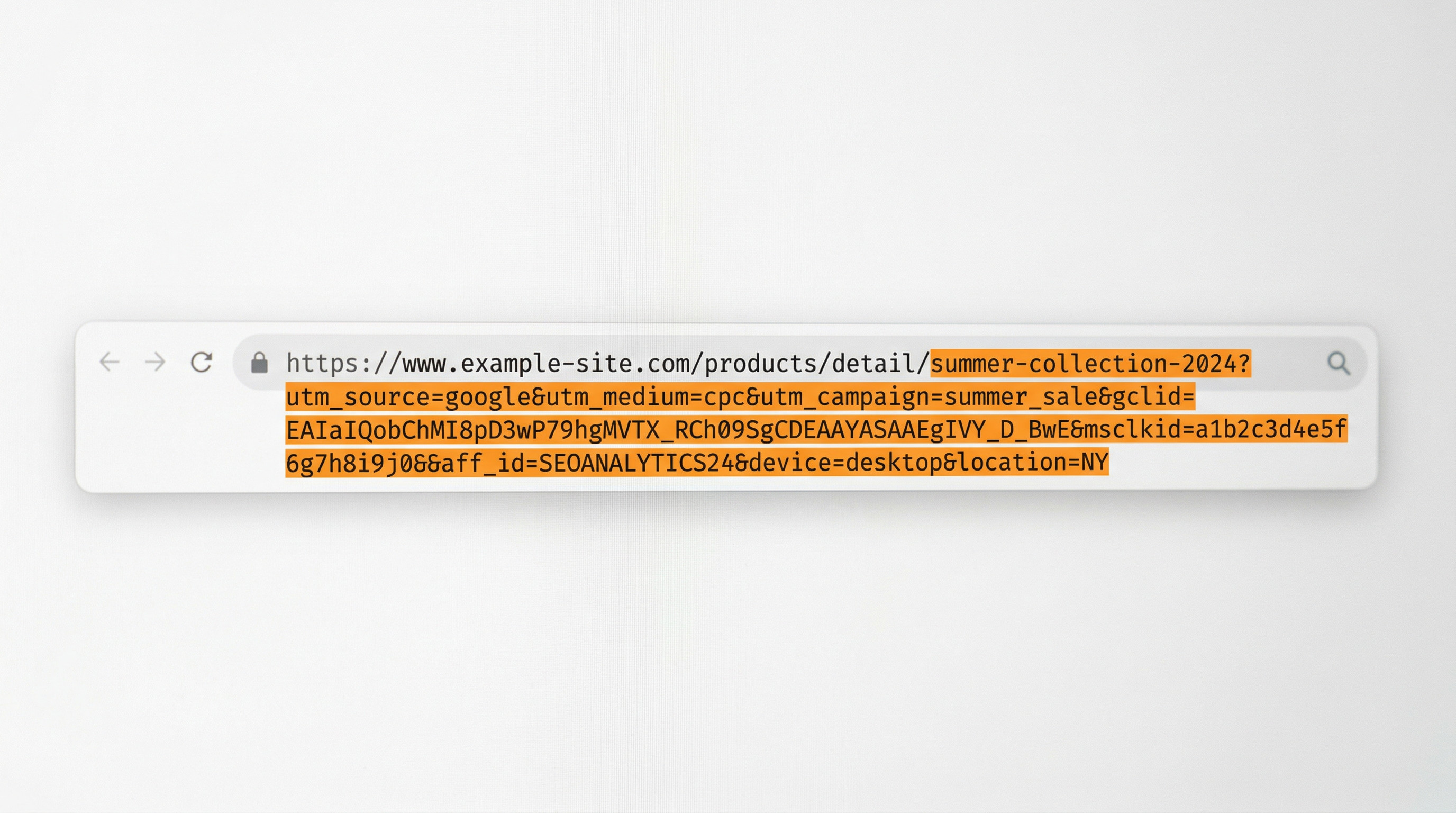

The most interesting part of the March 2026 core update was not only the ranking movement. It was how quickly a tidy explanatory story took over the conversation: Google, the story went, had just turned up information gain as the decisive ranking idea. That interpretation travelled fast because it felt intellectually satisfying. It gave SEOs a clear frame, a compelling phrase, and a reason to repackage long-running quality advice into a fresh update narrative.
But when you separate what Google actually confirmed from what the SEO community inferred, the picture gets more useful and a lot less magical. The short version is this: Google officially confirmed the rollout. Google did not officially confirm that “information gain” was the defining mechanism of the update. In the English-language SEO space, the most credible coverage treated information gain as an interpretive lens, not as a confirmed new switch Google had flipped.
What Google actually confirmed
Google’s own status dashboard confirmed the existence of the March 2026 core update and documented the rollout as a ranking update event. That is the official baseline. Google’s standing documentation on core updates also stayed the same: there was no new page introducing an “information gain update,” no naming convention around that concept, and no explicit explanation that March 2026 should be understood through that single lens.
Evidence baseline: if a claim about a core update cannot be traced back to the Search Status Dashboard or Search Central documentation, it belongs in the bucket of interpretation, field observation, or speculation, not official confirmation.
This matters because core updates are usually discussed in a language of patterns, not engineering disclosures. Google regularly points site owners back to familiar advice around helpful, reliable, people-first content, and that advice is intentionally broader than any one theory a community prefers at a given moment.

Why the information gain story spread so easily
The idea did not appear out of nowhere. It sits at the intersection of three forces that are all real:
- Google has long rewarded differentiated pages over generic rewrites.
- The SEO community has become more sensitive to originality in an era flooded with templated AI content.
- “Information gain” sounds precise, which makes it unusually sticky as an explanatory label.
That last point is important. The phrase compresses several valuable ideas into one compact theory: uniqueness, added value, first-hand experience, synthesis, comparison, and stronger editorial positioning. Those are all useful editorial goals. But turning them into a neat “Google now ranks information gain” story can overstate the confidence level of the evidence.
The trap: a good editorial principle can still become a bad diagnostic shortcut. Once a phrase starts explaining everything, it usually explains less than people think.
What I found in the English-language SEO space
In English coverage, the useful material came from a mix of rollout reporting, volatility tracking, and post-update interpretation. The common thread was not “Google confirmed information gain.” The common thread was closer to: pages that contributed something genuinely more useful seemed better positioned than pages that merely reworded what already existed.
That distinction matters. Here is how the English discussion broke down:
| Source type | What it added | How to read it |
|---|---|---|
| Google official sources | Rollout confirmation and generic core update guidance | Highest confidence for what was actually announced |
| Industry news sites | Timing, volatility, and commentary from observed winners and losers | Useful for field signal, but not a substitute for Google confirmation |
| Independent analysts | Explanatory frames like originality, depth, and differentiated value | Often insightful, but still interpretation rather than official attribution |
Search Engine Roundtable focused on the rollout event itself and the reaction across the SEO community. Search Engine Journal covered the completion of the rollout and the practical implications. Aleyda Solis and other experienced practitioners framed the update through content quality, differentiation, and utility, which is directionally useful. What I did not find was a strong English-language consensus that Google had explicitly rolled out a confirmed “information gain system” in March 2026.
That is the part worth keeping. The English-language conversation is useful when it sharpens your content standards. It gets less useful when it turns a fuzzy but helpful principle into a pseudo-official ranking announcement.
Why the framing still matters
The core observation is still useful: search results are becoming less forgiving of pages that do not add enough editorial delta. That point is worth taking seriously. If ten pages answer the same query with the same paragraph order, the same subtopics, the same examples, and the same obvious conclusions, one of them may survive on domain strength alone, but most of them are exposed.
Where I would tighten the framing is simple: treat information gain as a strong content model, not as a confirmed one-line explanation of the March 2026 core update. That difference sounds subtle, but it changes how you act. It pushes you toward better evidence and calmer prioritization instead of reactive mythology.
What to do if your site was hit
If you lost visibility during or after the March 2026 rollout, the worst move is to chase abstract ranking-factor lore. A better workflow is to audit what your page contributes that a strong competing page does not.
1. Compare contribution, not just keyword overlap
Do not start by counting missing phrases. Start by asking whether your page offers any one of the following:
- first-hand evidence or testing
- original synthesis of multiple sources
- better examples, comparisons, or edge-case coverage
- fresher context that changes the reader’s decision
- a stronger information architecture for the actual task behind the query
2. Cut generic opening sections
A lot of underperforming pages still waste the first third of the article on textbook filler. When the page only gets specific deep into the scroll, it often feels replaceable even if the bottom half is decent.
3. Add proof, not adjectives
“Comprehensive,” “ultimate,” and “complete” are not signals of value. Screenshots, examples, comparisons, charts, implementation notes, test conditions, limitations, and source transparency are.
4. Review query intent against the SERP, not against your outline
Some pages lose because they are bad. Others lose because they are pointed at the wrong intent. A page written like a tutorial may rank poorly against a query whose current SERP rewards commentary, product selection, or fast diagnostics.
Practical rule: if your article could be rewritten by someone who never touched the problem, never tested anything, and only paraphrased the top five results, it is exactly the kind of page that will keep feeling fragile after broad core updates.
The stronger interpretation of “information gain”
The most useful way to carry the idea forward is not as a secret factor, but as a publishing standard. Ask of every article: what does the reader learn here that they are unlikely to get from the next competent page?
That can come from many places:
- fresh data
- real implementation details
- comparative framing
- clearer decision support
- more honest source handling
- faster access to the non-obvious answer
In other words, the concept is still useful even if the myth is not. That is the important distinction. You do not need Google to officially name an “information gain” system for differentiated content to be a better investment than scalable sameness.
Final take
The March 2026 core update did not need an invented silver-bullet explanation to teach the right lesson. Google confirmed the rollout. The English-language SEO discussion added real value around originality, specificity, and editorial contribution. The mistake begins only when a useful editorial principle gets treated like a formally confirmed Google statement.
If you want a safer operating model after March 2026, it is this: optimize for verifiable contribution, not catchy post-update mythology. That principle is harder to package, but much more likely to hold up across future core updates.